Originally posted October 17, 2018, in French (this article discusses SS19 fashion month)
If you like fashion, you may know that SS19 (spring/summer 2019) Fashion Month came to an end this September. For those of you who are not familiar with it, Fashion Month occurs twice a year and highlights the upcoming styles for the season (of course, working a season ahead). Designers use fashion shows as an opportunity to showcase some more creative styles, all while keeping the essence of wearable trends. Fashion Month consists of four weeks of shows in New York, London, Milan, and Paris. If you did not have enough time to watch every fashion show (who does?), here’s a summary of the most important moments of the month.
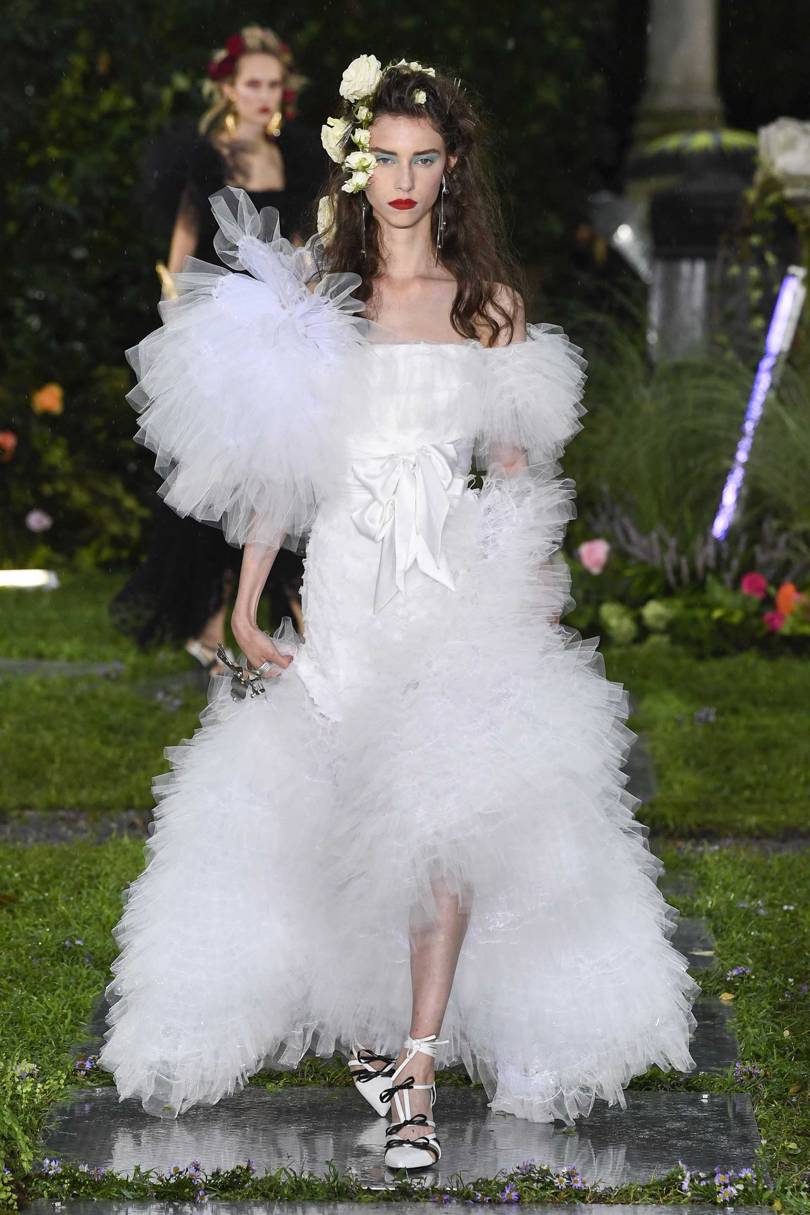
After the first week in New York, we could already see the trends that are going to hit every store next spring. Many designers opted for the color of marigolds and a general theme of happiness, shown in shows such as Rodarte, in which the designs included frills galore. Marc Jacobs even named his show “Sunny Side Up.” New York Fashion Week also brought more racial diversity than had previously been seen on the runway, notably in Tory Burch, Kate Spade, and especially in Rihanna’s Savage x Fenty show that closed New York Fashion Week, a spot normally reserved for Marc Jacobs. Escaping from the traditional tendency of designers to house their shows in Manhattan, Rihanna chose a trendy spot in Brooklyn for her venue. We also saw a return to the suits of the 80’s for women, reflecting society’s evolution toward accepting women in positions of power in the workforce.
Moving on to London, Riccardo Tisci’s first show for Burberry was very atypical for the city, which normally showcases smaller designers in more intimate environments. Tisci set his show in a large space and had an all-encompassing collection, something usually associated with Italy. Designer Richard Quinn opened his show with a political statement: students protesting government cuts to arts education, continuing New York’s trend of politically-minded shows. Celebrating the 10th anniversary of her brand, Victoria Beckham drew from styles of the 90’s through clothing and in using older models, paying homage to her days in the Spice Girls, all while keeping her reputation for clean and sophisticated styles. Finally, like in New York, designers opted for bright and happy colors.
In Milan, many of the shows combine fashion and the performing arts. At Emporio Armani, there was a full-on concert, and at Philipp Plein, Rita Ora performed. Ian Griffiths of Max Mara put forth a warmingly familiar collection of classic camel-colored coats, and Stella Tennant and Fendi were quick to follow in the monochromatic trend, a rather stark contrast to the near-fluorescent colors of New York and even London. Continuing Max Mara’s theme of familiarity, Dolce & Gabbana and Versace both had age and size diversity among their models to make bourgois fashion seem even a little more wearble to the everyday woman.
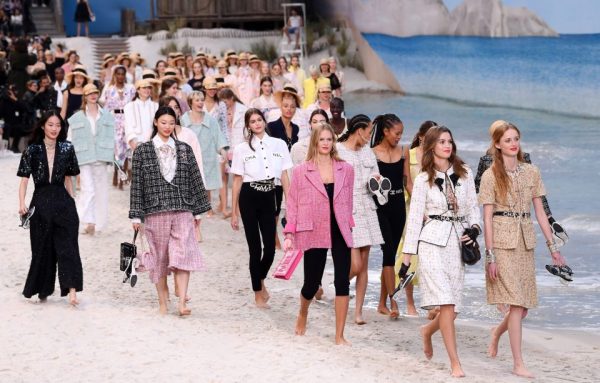
In Paris, like in Milan, the trend to makes the shows an interaction of various arts continued. Alessandro Michele started the week with Gucci, where spectators witnessed a song from Jane Birkin, and Dior was quick to follow. Dancers were dispersed among the models, creating a more interactive and animated show. Paris Fashion Week also carried the trends of joy and vibrant colors that started in New York Fashion Week, all in response to the darkness and division that characterizes the current political climate. As usual, Chanel had a superb show. Karl Lagerfeld transformed the Grand Palais into a beach, giving its viewers the feeling of being on vacation, and such joy continued with Louis Vuitton in the Louvre. Creative director Nicholas Ghesquière wanted to create ambiguity among the models to show the change among young people that gender terms are no longer as important as they used to be.
All in all, Fashion Month brought some much needed diversity and light. The world of fashion still has a lot of work, but more and more designers are taking steps to make the fashion industry more inclusive. And despite the political turmoil, Fashion Month created, even if for only a month, a space of happiness.

Credit for cover image: InStyle Magazine Australia
 Salut Madeleine